
I picked up this article from Frances Wang a freelance journalist based in Shanghai. The complete article can be found here and also below….
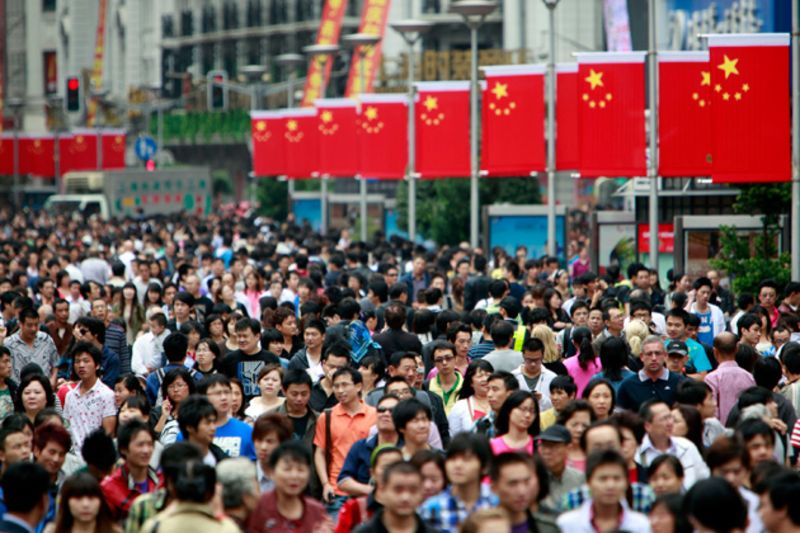
SHANGHAI, China – The Chinese market – with China surpassing Japan as the world’s second largest economic power in August – has become an important Asian market for big foreign companies. Cosmetics makers, for example, are showing tremendous interest in the market by signing Chinese models to advertise their products.
In 2010, this trend was highlighted when supermodel Liu Wen was picked up by New York-based Estée Lauder as its first Asian face. Actresses Yao Chen and Jiang Yiyan were hired by both Biotherm and Shu Uemura, two brands owned by Paris-based L’Oréal Group. And model Chunxiao became the face used by Tokyo-based Shiseido Co. Ltd.
Building a closer tie with local Chinese consumers is one major reason these companies have chosen Chinese faces, says Philippe Lamy, general manager of the luxury division at L’Oréal China. Read the rest of this entry »

Strive not to be a success, but rather to be of value. A. Einstein
(Picked up this article from the Mailmangroup where CEO Andrew Collins talks about international sports who are successfully breaking into China market and the game plan for doing so)
Someone had it right very early – the digital age is now living proof of how a value led strategy can lead to greater relationships with customers, long term engagement and can literally win substantial market share. What I’m really saying is this: If you have a great product, you can merely lead with value (specific to that audience), listen and open the doors to your brand. Read the rest of this entry »

An insight by Michael MacRitchie
CHINA’S UGLY BETTY “UGLY WUDI”
China — A raft of new Chinese television advertising restrictions have made sponsorship and product placement a strong alternative route to reaching a ballooning consumer market, according to an independent analysts’ report released recently.
The series of new TV ad rules put in place in the first quarter of 2010 by the State Administration of Radio Film and Television “play directly into the hands of sponsors and product placers,” the report from Beijing-based media consultants China Media Monitor-Intelligence said.
“There has never been a better time to start closing the gap between reaching consumers and making quality programming,” Kristian Kender, CMM-I’s research director, told MGI Entertainment. Read the rest of this entry »

A review by Lauren Jane
Taylor Swift has become a household name around the world by writing and recording songs that almost everyone can relate to in one way or another. Her honest songwriting nature has captivated fans and aided in helping her sell over ten million albums worldwide. This is partly due to the fact that she has successfully crossed over from country to pop and thus gained millions more fans in the process.
This crossover has been around for decades, but the current trend we are seeing today seems to be more pop-friendly with hints of country. The result? People by the masses love it. More mainstream pop radio stations can play these hits and the artists gain even more fans from the other side. Whether or not traditional country music lovers agree with this, it’s happening and it’s making a lot of fans happy as well as those big wigs at the labels. Read the rest of this entry »

An Insight by Michael MacRitchie
China-To understand the widening digital gap between the Chinese state and its people, consider the underground success of the American TV shows “Gossip Girl”, “Lost” & “Prison Break”.
Prison Break:
There isn’t much about this Fox drama that would suggest a Chinese hit.
Shot partly at Joliet Prison in Illinois, the show is an unabashedly far-fetched escape tale, in which tattooed genius Michael Scofield engineers his own arrest and imprisonment to help spring his brother.
Chock full of flashbacks, cliffhangers and so on, “Prison Break” has been a respectable success during its two seasons on American screens.
In China, however, the show ignited among the growing ranks of 123 million Web users.
It is still leading all other American programs on China’s most popular underground downloading sites. A translation of its second season has received more than 2.5 million views, nearly 10 times that of “Desperate Housewives,” China’s long-running online favorite. Read the rest of this entry »

A insight from Michael MacRitchie

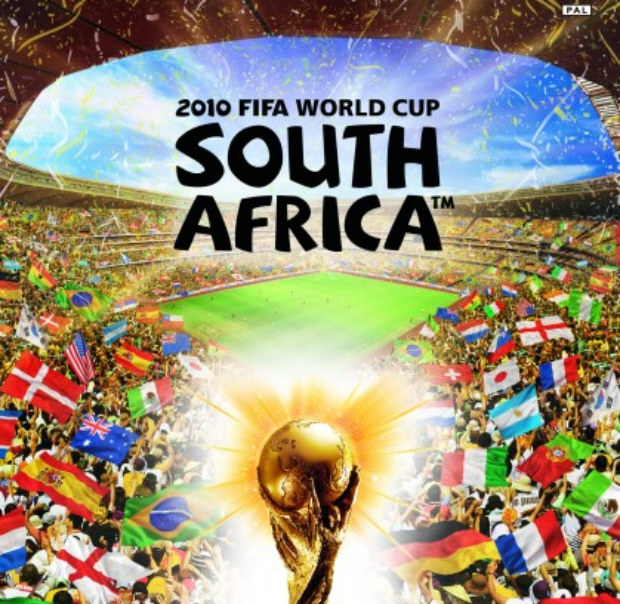
To follow on from Andrew Howie’s piece on the FIFA world cup, I would like to turn the readers attention to China…
Here in Shanghai one of the biggest TV networks CCTV (China Central Television) has won the rights to broadcast the World Cup and is now blowing the whistle for bids on advertising slots for the global sporting event to commence.
I met with He Haiming, the Vice President of the advertising department, he told MGI that the last batch of advertising slots including the “naming rights” for some special programs and slots for individual matches, will be made available to bidders in mid-April.
In November 2009, the national broadcasting giant first begun auctioning off prime-time advertising slots for the 2010 World Cup, which is due to kick off in South Africa on June 11. Read the rest of this entry »

A review by Michael MacRitchie
This is not your typical war movie. Instead of dwelling on bloodshed on the battlefield, The Founding of a Republic focuses on the psychological war between China’s Nationalists and Communists, and the complex negotiations of their power struggle. The inclusion of archival black-and-white footage, from pivotal battles such as as those at Huaihai and Pingjin to mao Zedong’s address to the nation after the was, effectively turns the film into a history lesson.
The movie chronicles a turbulent period during the chinese civil war, between the end of the Sino-Japanese war in 1945 and the official founding of the People’s Republic of China on 1 October, 1949. In a little more than 2 hours, the audience witness the most tumultuous times in China’s events in China’s recent past, including negotiations between Communists and Nationalist, the outbreak of Civil war and the subsequent retreat of the nationalists to Taiwan.
The big question on many people’s minds is: Was this movie going to be a massive propaganda piece about the evil Nationalists (KMT) and a whitewashed version of the Communist Party of China (CPC, aka CCP)? Read the rest of this entry »